#The_Three_Terrifying_Cages_on_a_Church
سه_قفس_وحشتناک_در_یک_کلیسا#
ساختمانی_مخروطی_که_در_آن_شورشیان_یک_موقع_در_آن_ پوسیدند#
#Spire_Where_Rebels_Once_Rotted
سه_قفس_وحشتناک_در_یک_کلیسا#
ساختمانی_مخروطی_که_در_آن_شورشیان_یک_موقع_در_آن_ پوسیدند#
#Spire_Where_Rebels_Once_Rotted
ترجمه از: پیمان پایدار
,
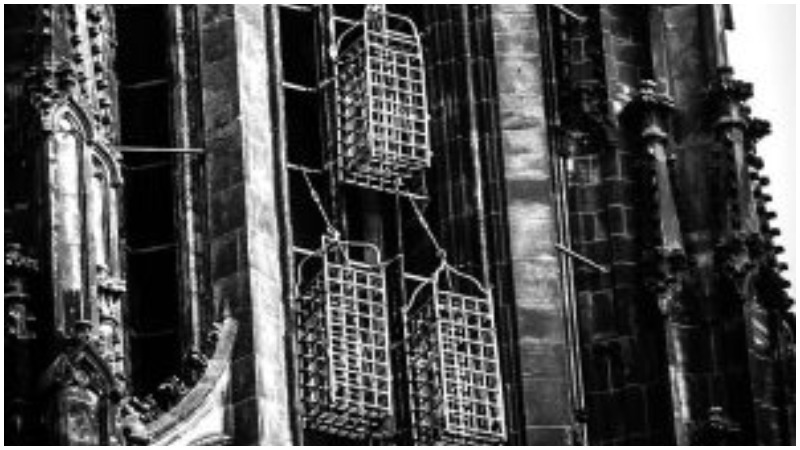
The German city of Münster in the province of North Rhine-Westphalia, today a peaceful university town, was the focus of a turbulent chapter in history, namely the brutal Anabaptist rebellion.
شهر مونستر آلمان در استان شمال راین وستفالیا، که امروز یک شهر آرامش بخش دانشگاهی است، مرکز ثقل یک فصل آشفته در تاریخ یعنی شورش خشن آنابپتیست بود.
شهر مونستر آلمان در استان شمال راین وستفالیا، که امروز یک شهر آرامش بخش دانشگاهی است، مرکز ثقل یک فصل آشفته در تاریخ یعنی شورش خشن آنابپتیست بود.
St. Lamberti Church, located on the Prinzipalmarkt, is adorned with a rather strange set of ornaments.
کلیسای سنت لامبرتی، واقع در بازار اصلی، با یک مجموعه عجیب و غریب از زیور آلات تزئین شده است.
کلیسای سنت لامبرتی، واقع در بازار اصلی، با یک مجموعه عجیب و غریب از زیور آلات تزئین شده است.
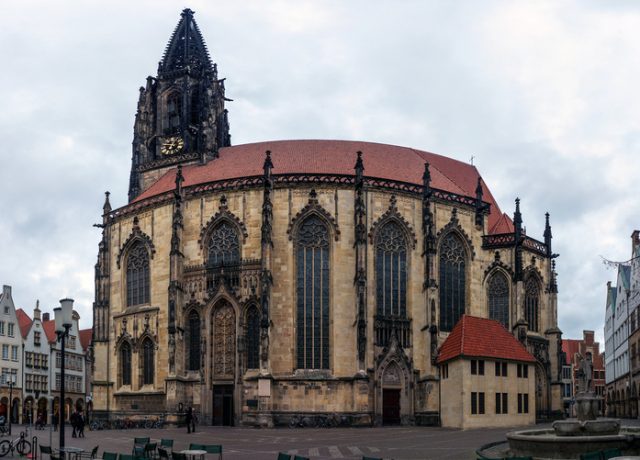
St. Lamberti Church in Munster, Germany.
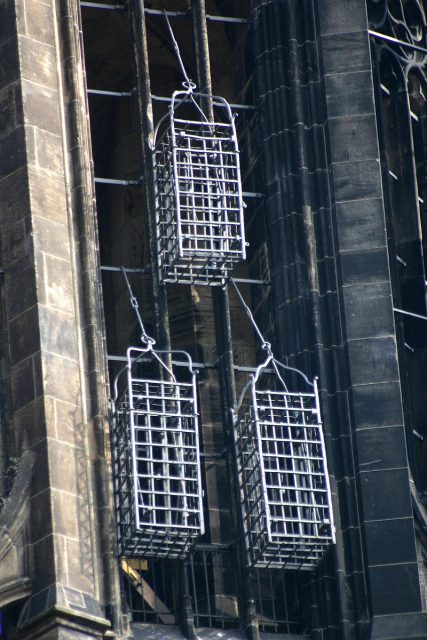
For almost 500 years, three man-sized iron cages have been left hanging from the church spire as a reminder of the disobedience of the 16th-century rebels.
تقریبا 500 سال است که سه قفس آهنی با اندازه منحصر به یک فرد از بخش مخروطی کلیسا آویزان شده است، به عنوان یادآور نافرمانی شورشیان قرن شانزدهم.
تقریبا 500 سال است که سه قفس آهنی با اندازه منحصر به یک فرد از بخش مخروطی کلیسا آویزان شده است، به عنوان یادآور نافرمانی شورشیان قرن شانزدهم.
The cages that once held the mutilated and tortured bodies of three rebel leaders now hang empty, still provoking debate among the citizens, not all of whom agree that this symbol of torture should be displayed in their town.
قفس هایی که یک موقع بدن های زخمی و شکنجه شده سه رهبر شورشیان را در خود جای داده بود اکنون خالی آویزان مانده اند و هنوز هم در میان شهروندان مورد بحث می باشد، و نه همه آنها موافقند که این نماد شکنجه در شهرشان کماکان به معرض نمایش گذاشته شود.
قفس هایی که یک موقع بدن های زخمی و شکنجه شده سه رهبر شورشیان را در خود جای داده بود اکنون خالی آویزان مانده اند و هنوز هم در میان شهروندان مورد بحث می باشد، و نه همه آنها موافقند که این نماد شکنجه در شهرشان کماکان به معرض نمایش گذاشته شود.
Cages of the leaders of the Münster Rebellion at the steeple of St. Lambert’s Church. Photo by Rüdiger Wölk CC BY-SA 2.5
In 1530, Münster was a town divided between Catholic aristocracy and the disenfranchised peasants, poor and reformist.
در سال 1530، مونستر یک شهر تقسیم شده بین اشرافیت کاتولیک و دهقانان محروم از حق رای ، فقیر و اصلاح طلب بود.
در سال 1530، مونستر یک شهر تقسیم شده بین اشرافیت کاتولیک و دهقانان محروم از حق رای ، فقیر و اصلاح طلب بود.
At the head of the later was Bernhard Rothman, an evangelical Protestant who had drawn a large following among the angry citizens of the town who had felt that their rights were not respected.
رهبر گروه دوم شخصی بود بنام برنارد روتمن، پروتستانی که در میان شهروندان عصبانی شهر که احساس می کردند که به حقوقشان احترام گذاشته نمی شد، پیروان زیادی را داشت.
رهبر گروه دوم شخصی بود بنام برنارد روتمن، پروتستانی که در میان شهروندان عصبانی شهر که احساس می کردند که به حقوقشان احترام گذاشته نمی شد، پیروان زیادی را داشت.

Historical drawing of the execution of the leaders of the rebellion. In the background, the cages are already in place on the old steeple of St. Lambert’s Church.
نقاشی تاریخی اعدام رهبران شورشیان. در در زمینه، قفسهایی که از قبل در آنجا نصب شده اند دیده می شود
The rising numbers of rebels threatened the position of the Catholic Church and its hegemony. That alarmed the prince-bishop, Franz von Waldeck, who tried to expel the reformists and their leader from the town.
تعداد رو به افزایشی شورشیان موقعیت کلیسای کاتولیک و هژمونی آن را تهدید می کرد. این وضعیت هراس فرانس فون والدک، شاهزاده اسقف، که سعی داشت اصلاح طلبان و رهبرانشان را از شهر اخراج کنند، را برانگیخت.
تعداد رو به افزایشی شورشیان موقعیت کلیسای کاتولیک و هژمونی آن را تهدید می کرد. این وضعیت هراس فرانس فون والدک، شاهزاده اسقف، که سعی داشت اصلاح طلبان و رهبرانشان را از شهر اخراج کنند، را برانگیخت.
However, under the pressure of Rothman’s followers, the city council did not allow for it. On February 14, 1533, the council of Münster granted the religious freedom to all groups in the town.
با این حال، تحت فشار پیروان راتمن، شورای شهر اجازه اینکار را نداد. در 14 فوریه 1533، شورای مونستر آزادی مذهبی را به تمام گروه های این شهر اعطا کرد.
با این حال، تحت فشار پیروان راتمن، شورای شهر اجازه اینکار را نداد. در 14 فوریه 1533، شورای مونستر آزادی مذهبی را به تمام گروه های این شهر اعطا کرد.
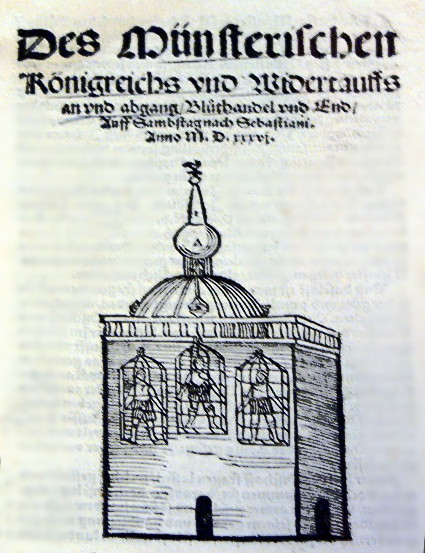
German Historical Museum, Berlin. Pamphlet ‘The Kingdom of Munster’ about the torture and execution of the leaders of the Anabaptist rebellion, 1536. Photo by Wolfgang Sauber CC BY SA 3.0
Jan Matthijs, an Anabaptist preacher from Leiden in the Netherlands, figured this treaty of religious tolerance would make Münster the perfect place for him to establish his reformist utopia.
ژان ماتیژیس، یکی از واعظان آنابپتیست از لیدن در هلند، حس کرد که این پیمان بردباری مذهبی باعث می شود که مونستر جایگاه مطلوبی را برای ایجاد آرمانهای اصلاح طلبانه اش ایجاد کند.
ژان ماتیژیس، یکی از واعظان آنابپتیست از لیدن در هلند، حس کرد که این پیمان بردباری مذهبی باعث می شود که مونستر جایگاه مطلوبی را برای ایجاد آرمانهای اصلاح طلبانه اش ایجاد کند.
The Anabaptist sect “rebaptizers” were widely persecuted for their belief that only willing baptism as an adult would allow a person to enter the kingdom of heaven. Their children were thus not baptized, a concept that was feared and even viewed as heretical by many.
فرقه آنابتیست "غسل تعمید شدگان مجدد" به شدت بابت اعتقاداتشان مورد آزار و اذیت قرار می گرفتند زیرا معتقد بودند که تنها بپتیستهای راغب به عنوان افراد بالغ به فرد اجازه می دهد تا به بهشت وارد شوند. بنابراین، فرزندان آنها تعمید نمی یافتند، مفهومی که از جانب بسیاری مورد ترس بود و حتی بعنوان مرتد به شمار می رفت.
One of the central tenets of Anabaptism that Jan upheld was social equality. Alongside his idea to ban private property and money and establish a sort of pure communism was another controversial belief that did not sit well with the pious Catholics and Lutheran Protestants. Allegedly, Jan of Leiden was a proponent of polygamy.
یکی از اصول مرکزی آنابپتیسم که ژان تأیید می کرد، برابری اجتماعی بود. در راستای این ایده برای ممنوع کردن مالکیت خصوصی و پول و ایجاد نوعی کمونیسم خالص، اعتقاد بحث برانگیز دیگری بود که با کاتولیک های دین دار و پروتستان های لوتری خوش نمی آمد. ظاهرا، ژان لیدن پیرو مکتب چند همسری بود.
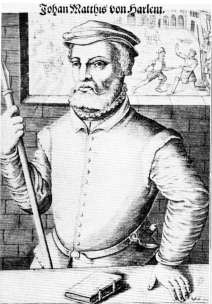
Jan Matthys
However, on arriving in Münster, Jan of Leiden and his followers were welcomed by Rothman, who embraced their radical ideas.
با این حال، در بدو ورود به مونستر، ژان لیدن و پیروانش توسط روتمن، که ایده های رادیکال او را پذیرفته بودند، مورد استقبال قرار گرفتند.
با این حال، در بدو ورود به مونستر، ژان لیدن و پیروانش توسط روتمن، که ایده های رادیکال او را پذیرفته بودند، مورد استقبال قرار گرفتند.
It did not take long for Jan to style himself as king of what soon became known as the “New Jerusalem,” preaching that the Second Coming of Jesus Christ would happen that coming Easter and leading a rebellion against Catholic rule. The city council was taken over by fanatical Anabaptist believers.
برای ژان مدت زیادی طول نکشید که خود را به عنوان پادشاه آنچه که به زودی به عنوان "اورشلیم جدید" شناخته می شد اعلام کند، به وعظ ایده آمدن دوم عیسی مسیح، که قرار بود همان عید پاک رخ دهد، رهبری شورش علیه حاکمیت کاتولیک را بعهده گرفت. شورای شهر توسط مؤمنان آنابپتیستهای متعصب گرفته شد.
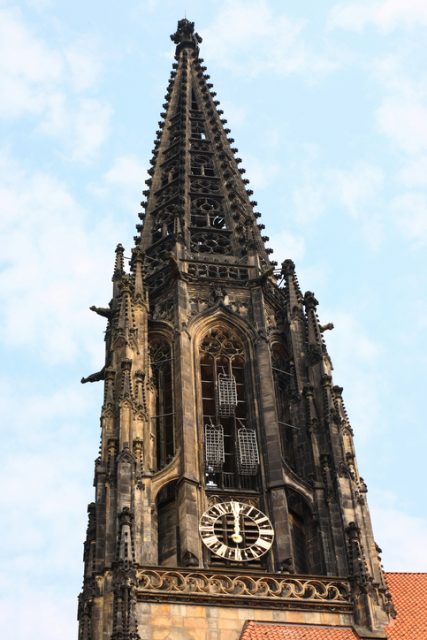
The executed dead bodies of the Anabaptists Jan van Leiden, Bernd Knipperdollink and Bernd Knecht were placed in the iron cages following the religious rebellion in the 16th century. Münster, Westfalen, Germany.
جسد اعدام شده گان آنابپتیست ژان ون لیدن ، برند نیپردولینک و برند نخت در قفس های آهنین پس از شورش مذهبی در قرن شانزدهم قرار گرفتند. مونستر، وستفالن، آلمان.
In a rapid turnaround of the status quo, Jan’s rousing calls to execute those who refused to be rebaptized led to many Catholics and Lutherans fleeing the city, as a flood of Anabaptists, moved in. The rebels burned all books apart from the Bible, and, according to The Local de, forced all women of marrying age to take a husband — Jan himself had 16 wives. Corporal punishment was meted out freely for trivial offenses against the new hierarchy.
در تحول سریع وضع موجود، جنجال خواست ژان برای اعدام کسانی که حاضر به غسل تعمید مجدد نشدند، بسیاری از کاتولیک ها و لوترنها را از شهر فراری داد، همینکه سیل انابپتیست ها وارد شهر شدند. شورشیان همه کتاب ها را بجز کتاب مقدس سوزاندند و ، طبق گفته "محلی د"، تمام زنانی که وقت ازدواجشان بود را مجبور به گرفتن شوهر کرد - ژان خودش 16همسر داشت . مجازات بدنی به سادگی برای جرایم ناچیز علیه سلسله مراتب اعمال می شد.
در تحول سریع وضع موجود، جنجال خواست ژان برای اعدام کسانی که حاضر به غسل تعمید مجدد نشدند، بسیاری از کاتولیک ها و لوترنها را از شهر فراری داد، همینکه سیل انابپتیست ها وارد شهر شدند. شورشیان همه کتاب ها را بجز کتاب مقدس سوزاندند و ، طبق گفته "محلی د"، تمام زنانی که وقت ازدواجشان بود را مجبور به گرفتن شوهر کرد - ژان خودش 16همسر داشت . مجازات بدنی به سادگی برای جرایم ناچیز علیه سلسله مراتب اعمال می شد.
In a bid to put an end to this anarchistic religious fervor and regain Catholic control over Münster, Bishop von Waldeck gathered a mercenary army and laid siege to the city.
اسقف فون والدک در تلاش برای پایان دادن به این اشتیاق شدید مذهبی (واژه "آنارشیستی" خیلی بی جا مورد استفاده قرار گرفته-م) و به دست گرفتن کنترل کاتولیک ها بر مونستر، یک ارتش مزدور را جمع آوری و شهر را محاصره کرد.
اسقف فون والدک در تلاش برای پایان دادن به این اشتیاق شدید مذهبی (واژه "آنارشیستی" خیلی بی جا مورد استفاده قرار گرفته-م) و به دست گرفتن کنترل کاتولیک ها بر مونستر، یک ارتش مزدور را جمع آوری و شهر را محاصره کرد.
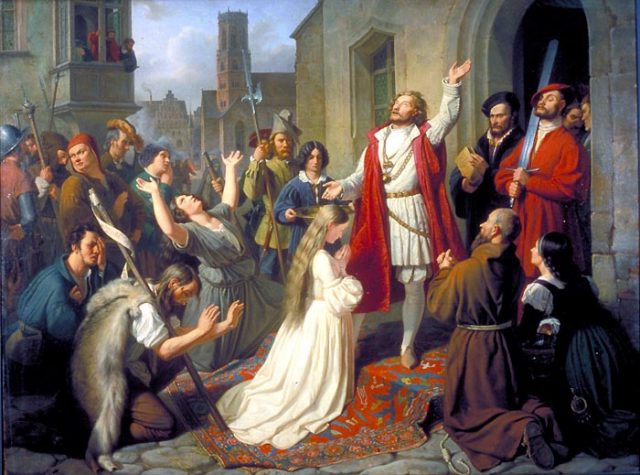
Jan van Leiden baptizing a girl during the Münster Rebellion by Johann Karl Ulrich Bähr, 1840.
ژان ون لیدن، به غسل تعمید دختری در طول شورش مونستر توسط 'یوهان کارل اولریش بر' دست زد، 1840
The city was finally broken on the night of June 25, 1535. Aided by a captured Anabaptist deserter, von Waldeck’s army entered through the main gate and recaptured Münster. Jan of Leiden and his two closest followers, Bernd Knipperdollink and Bernd Knitting, were imprisoned and tortured using various techniques.
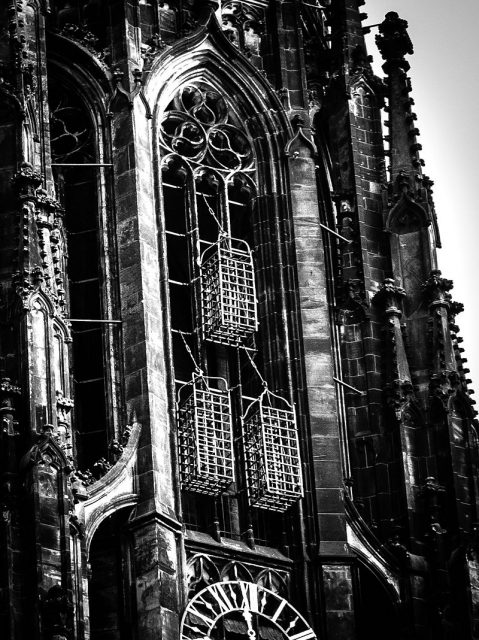
Cages of the Anabaptists at the Tower of St. Lamberti Church, Münster, North Rhine-Westphalia, Germany. Photo: Dietmar Rabich CC BY-SA 4.0
They were repeatedly burned with hot tongs before being killed. As reported by German Girl in America “the Spanish Inquisition learned from and used these German Torture techniques.”
After the prisoners were killed, van Waldeck had the three iron cages made in order to display the mutilated bodies as a warning to any other would-be rebels. Their remains were left dangling from the tower for 50 years.
The bodies were a feast for ravens who frequented them on regular basis. According to Mental Floss, this scene prompted artists to draw numerous pictures and paintings of it.
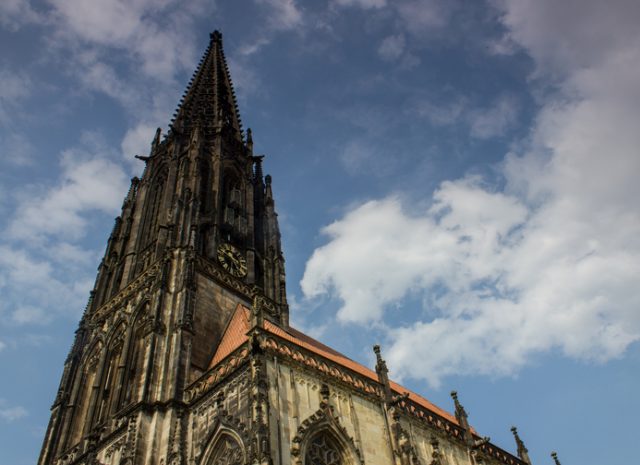
St. Lamberti Church, Muenster, Germany.
After the bodies were removed, the cages were left on the spire. In 1800 the original tower was demolished and rebuilt — and the cages were put back in the place.
During World War II, Münster was a target for British bombing raids. St. Lamberti Church received a direct hit that caused the cages to come crashing down. Four years later the church was rebuilt, and the repaired cages put back in their original place.
در طی جنگ جهانی دوم، مونستر هدف حمله بمباران بریتانیا بود. کلیسای سنت لامبرتی یک ضربه مستقیم دریافت کرد که باعث شد تا قفس ها سقوط کنند. چهار سال بعد کلیسا بازسازی شد و قفس های تعمیر شده به محل اصلی خود بازگردانده شدند.
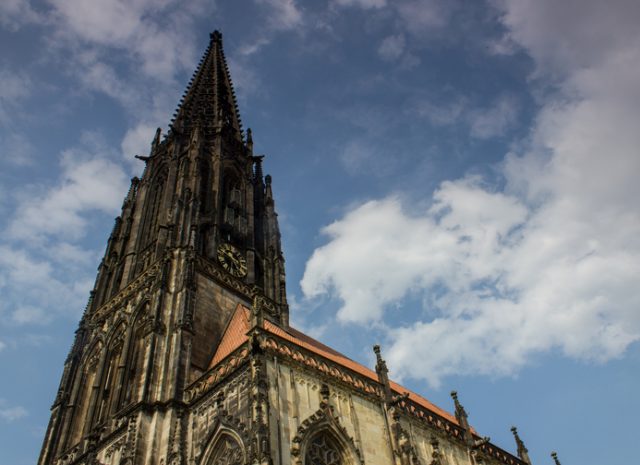
St. Lamberti Church, Muenster, Germany.
The cages were and still are a topic of debate on religious tolerance, as they are seen as a symbol of tyranny and aggression.
In 1987, the church installed light bulbs, serving as a replacement for candles, which burn from dusk till dawn “in memory of their departed souls.”
در سال 1987، کلیسا لامپهای را نصب کرد ، به عنوان جایگزینی برای شمع ها ، که از غروب خورشید تا سپیده دم می سوختند "به خاطره روحهای ترک کرده شان ".
St. Lamberti Church in Münster is interesting because of an additional and unrelated reason. It is the only church in Münster to have a Türmerin or door-watcher. The solitary post is currently held by Martje Saljé, Münster’s first female Türmerin.

No comments:
Post a Comment