#The_Highway_of_Deathبزرگراه_مرگ#
Twenty-five years ago, one of the most brutal massacres in war history occurred in Iraq, along Highway 80, about 32 km west of Kuwait city. On the night of February 26–27, 1991, thousands of Iraqi soldiers and civilians were retreating to Baghdad after a ceasefire was announced when President George Bush ordered his forces to slaughter the retreating Iraqi army. Fighter planes of the coalition forces swooped down upon the unarmed convoy and disabled the vehicles in the front, and at the rear so that they couldn’t escape. Then wave after wave of aircraft pounded the trapped vehicles for hours on end. After the carnage was over, some 2,000 mangled Iraqi vehicles and charred and dismembered bodies of tens of thousands of Iraqi soldiers lay for miles along what came to be known as the “Highway of Death”. Several hundred more littered along another road, Highway 8, that leads to Basra. The scenes of devastation on these two roads became some of the most recognizable images of the Gulf War.
بیست و پنج سال پیش، یکی از وحشیانه ترین قتل عامها در تاریخ جنگ در عراق رخ ، در امتداد بزرگراه 80، در حدود 32 کیلومتری غرب کویت، رخ داده است. در شب فوریه 27-26، 1991 وقتی هزاران سرباز و غیرنظامی عراقی پس از اعلام آتش بس داشتند به بغداد عقب نشینی میکردند، رئیس جمهور جورج بوش دستور به قتل عام نیروهای ارتش عراقی را داد. هواپیماهای جنگنده نیروهای ائتلاف به کاروان غیر مسلح فرو ریختند و وسایل نقلیه را در جلو و عقب از کار انداختند تا نتوانند فرار کنند. سپس موج پس از موج هواپیما به مدت چندین ساعت ماشینهای گیر کرده را "کوبیدند. پس از این کشتار ، حدود 2،000 وسیله نقلیه عراقی منهدم شد و بدن های ده ها هزار سرباز عراقی در چندین کیلومتر به آنچه که به عنوان "بزرگراه مرگ" شناخته گردید دیده شد. چند صد تا بیشتر در جاده دیگری، بزرگراه 8، که منجر به بصره می شود، در هم پاشید. صحنه های ویرانی در این دو جاده، بعضی از تصاویر قابل تشخیص از جنگ خلیج فارس بود.

Photo credit: www.informationclearinghouse.info
The day before, Baghdad had radio announced that Iraq's Foreign Minister had accepted the Soviet ceasefire proposal and had ordered all Iraqi troops to withdraw from Kuwait in compliance with UN Resolution 660. President Bush, however, had refused to believe it and had responded that "there was no evidence to suggest the Iraqi army is withdrawing. In fact, Iraqi units are continuing to fight. . . We continue to prosecute the war."
The next day, the Iraqi President had himself announced over the radio that the withdraw had indeed begun on two highways and would be completed that day, to which Bush had reacted calling Hussein's announcement "an outrage" and "a cruel hoax."
Rather than accept the offer of Iraq to surrender and leave the field of battle, thereby risking a settlement that might not be favorable to the United States, Bush and the U.S. military strategists decided simply to kill as many Iraqis as they possibly could.
The bombing started near midnight. At first US and Canadian jets bombed the front and rear ends of the convoy to prevent it from moving forward or back, then attacked the trapped convoy by repeated bombing. The Commander-in-Chief of the United States Central Command had received instruction from Bush administration to "not to let anybody or anything out of Kuwait City." Consequently, any vehicle that diverted off of the highway was tracked, hunted and destroyed individually. Even disarmed Iraqi soldiers who surrendered were mowed down by gunfire. Not one Iraqi survived.

Demolished vehicles line Highway 80, on 18 April 1991. Photo credit: TECH. SGT. JOE COLEMAN/Wikimedia
“The cabs of trucks were bombed so much that they were pushed into the ground, and it's impossible to see if they contain drivers or not. Windshields were melted away, and huge tanks were reduced to shrapnel,” wrote Lebanese-American journalist Joyce Chediac.
“The massacre of withdrawing Iraqi soldiers violates the Geneva Conventions of 1949, Common Article III, which outlaws the killing of soldiers who are out of combat,” wrote Joyce Chediac. “The Iraqi troops were not being driven out of Kuwait by U.S. troops as the Bush administration maintains. They were not retreating in order to regroup and fight again. In fact, they were withdrawing, they were going home.”
“To attack the soldiers returning home under these circumstances is a war crime,” Chediac added.
"Even in Vietnam, I didn't see anything like this. It's pathetic," said Major Bob Nugent, an Army intelligence officer.
“The most disturbing aspect of the incident was the secrecy involved,” wrote Malcolm Lagauche. “When Newsday broke the story, many were taken by surprise. According to members of the U.S. House and Senate Armed Forces Committees, the Pentagon had withheld details of the assault from the committees.”
The media was also given a different story. U.S. field commanders tried to portray that Iraqi forces were not voluntarily withdrawing but were being pushed from the battlefield.
Four years later, General Norman Schwarzkopf tried to justify what had happened on the Highway of Death:
“The first reason why we bombed the highway coming north out of Kuwait is because there was a great deal of military equipment on that highway, and I had given orders to all my commanders that I wanted every piece of Iraqi equipment that we possibly could destroy. Secondly, this was not a bunch of innocent people just trying to make their way back across the border to Iraq. This was a bunch of rapists, murderers and thugs who had raped and pillaged downtown Kuwait City and now were trying to get out of the country before they were caught.”
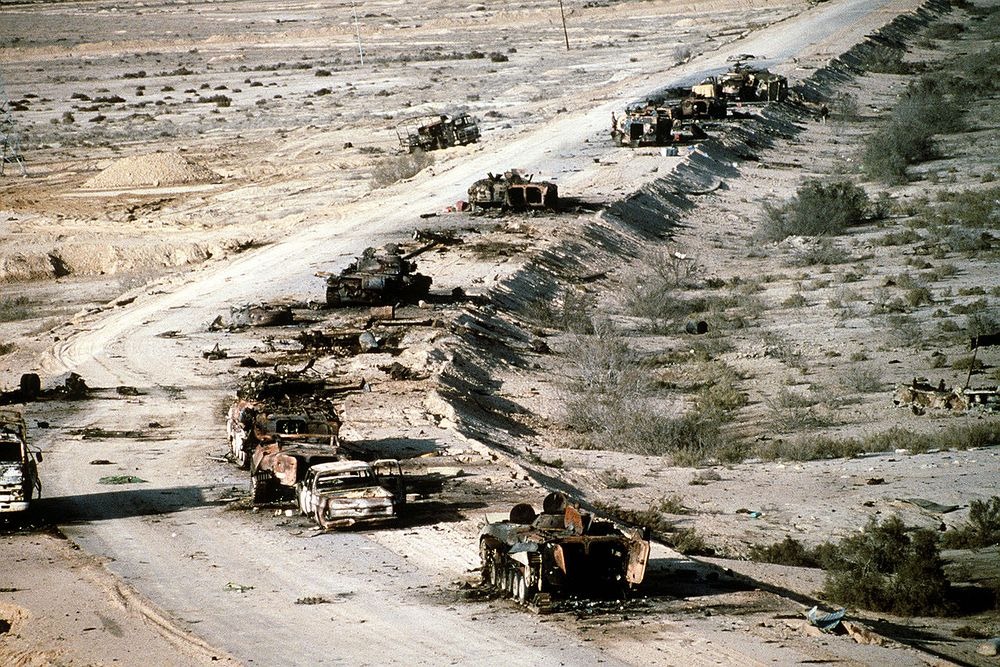
Photo credit: Staff Sgt. Dean Wagner/Wikimedia

Photo credit: o.canada.com

Photo credit: o.canada.com
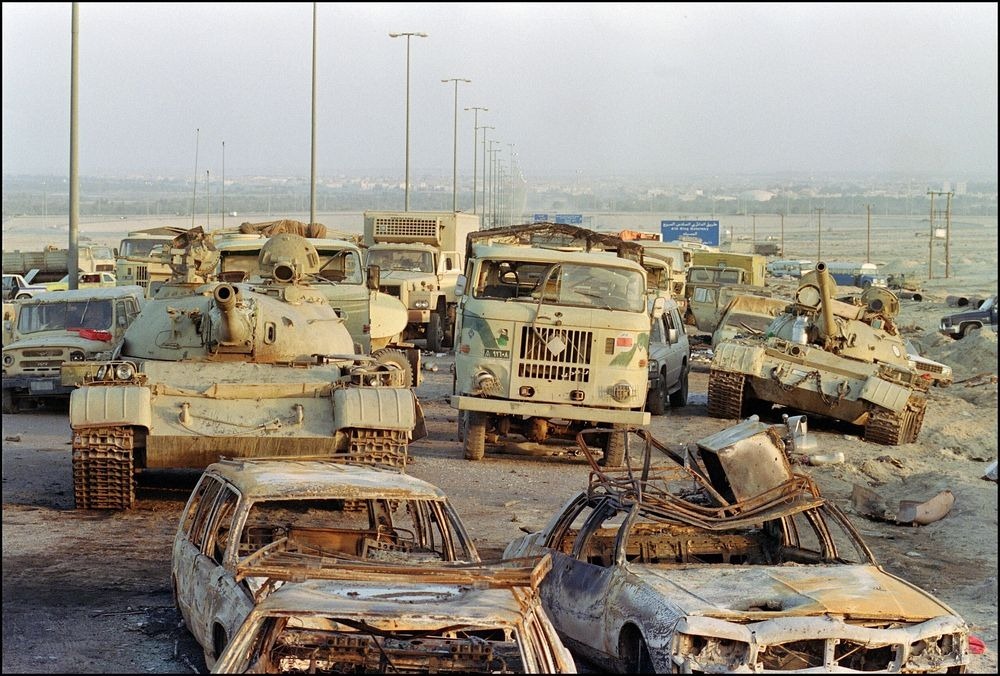
Photo credit: o.canada.com

The charred remains of an Iraqi soldier as he attempted to pull himself up over the dashboard of his truck. Photo credit: Kenneth Jarecke

The burned-out truck, surrounded by corpses, on the “Highway of Death”. Photo credit: Kenneth Jarecke

The sole of a shoe left behind while fleeing Kuwait along the Highway of Death, taken on February 28, 2003. Photo credit: Christiaan Briggs/Wikimedia

Photo credit: PHC HOLMES, US Navy/Wikimedia

Photo credit: PHC HOLMES, US Navy/Wikimedia


No comments:
Post a Comment